

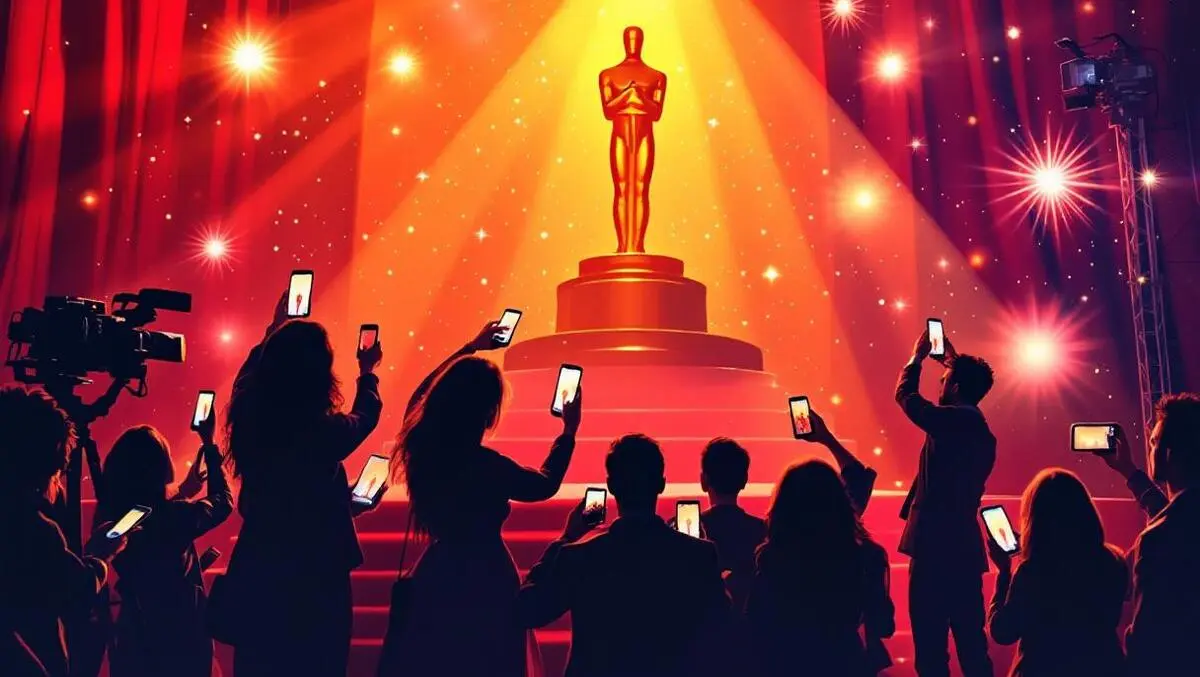
Creators eclipse broadcasters in Oscars social media surge
Tue, 24th Mar 2026
Kolsquare said influencers, rather than film studios or broadcasters, drove audience attention around this year's Oscars. The marketing platform pointed to sharp jumps in social media engagement tied to creator-led content and brand activity.
Its analysis examined how brands and creators performed on Instagram and TikTok during the ceremony. Online reactions, red-carpet clips and creator-made videos drew more attention than conventional television coverage, it argued. Among brands using the moment to engage viewers, Burger King stood out.
On Oscars night, Burger King's Earned Media Value on Instagram rose from GBP £3,400 to GBP £48,500. On TikTok, its EMV climbed from GBP £850 to GBP £33,150, a rise of more than 3,800%.
Disney and L'Oréal also ran campaigns tied to the ceremony, but Burger King generated the strongest response by leaning on customer voices and social commentary rather than polished advertising.
Creator Shift
The findings reflect a broader shift in marketing budgets, according to Kolsquare's Defining the Creator Economy in 2026 report. It found that 72% of European brands plan to increase influencer marketing spending this year, up from 54% in 2025.
The data also suggests brands are placing greater emphasis on smaller creators. Micro-influencers, defined here as those with between 10,000 and 100,000 followers, are now used by most brands, reflecting a shift towards relatability over sheer audience size.
Some individual creators still drew audiences that rivalled or exceeded traditional broadcasts. Amelia Dimoldenberg, creator of Chicken Shop Date, was among the personalities conducting Oscars red-carpet interviews and generated some of the largest numbers in the analysis.
Her Instagram reel featuring Ethan Hawke recorded 20.3 million views and GBP £2.55 million in EMV. A TikTok interview with the actor drew more than 10 million views.
Those figures compare with typical UK television audiences for the Oscars of around 1 million to 2 million viewers at peak, while last year's US broadcast audience reached 19.7 million.
Brand Tie-Ins
Vanity Fair used creators including Jake Shane, Quenlin Blackwell and Brittany Broski to host red-carpet interviews from its Oscars Party. Shane's appearance drew criticism from some journalists over awkward questions, showing that creator-led coverage can also face scrutiny as media and social formats merge.
Fashion and luxury labels also gained traction through those creator partnerships. Content from Blackwell featuring her Chanel dress generated an EMV of £290,000 and 2.4 million views, according to the figures.
Broski, meanwhile, generated an EMV of GBP £262,000 for Jimmy Choo and a further GBP £262,000 for Versace. The results underscore how brands associated with red-carpet appearances can reach audiences through creator channels rather than relying solely on official event exposure or traditional entertainment coverage.
Kolsquare argues that influence at major cultural events has shifted from broadcasters and organisers towards social media personalities who control distribution on fast-moving platforms. That change affects not only media companies and entertainment groups but also advertisers deciding where to allocate their budgets around major public moments.
Quentin Bordage, CEO and Founder, Kolsquare, said, "Creators aren't just amplifying cultural moments; they are shaping how those moments are experienced. The Oscars are a clear example of this shift. What was once a broadcast-first event is now a creator-led ecosystem, where relevance is determined by the content people choose to engage with."
"For brands, this changes everything. It's no longer about securing visibility through traditional channels, but about getting attention via creators who bring authenticity, speed, and cultural relevance. Those that succeed are the ones willing to participate in the conversation, rather than simply sponsor it."
The figures point to a wider reordering of attention around live entertainment. The ceremony itself remains the centrepiece, but much of the public response now unfolds elsewhere. In that environment, brand value lies increasingly in the clips, reactions and interviews circulating across social platforms rather than in the official broadcast feed alone.