

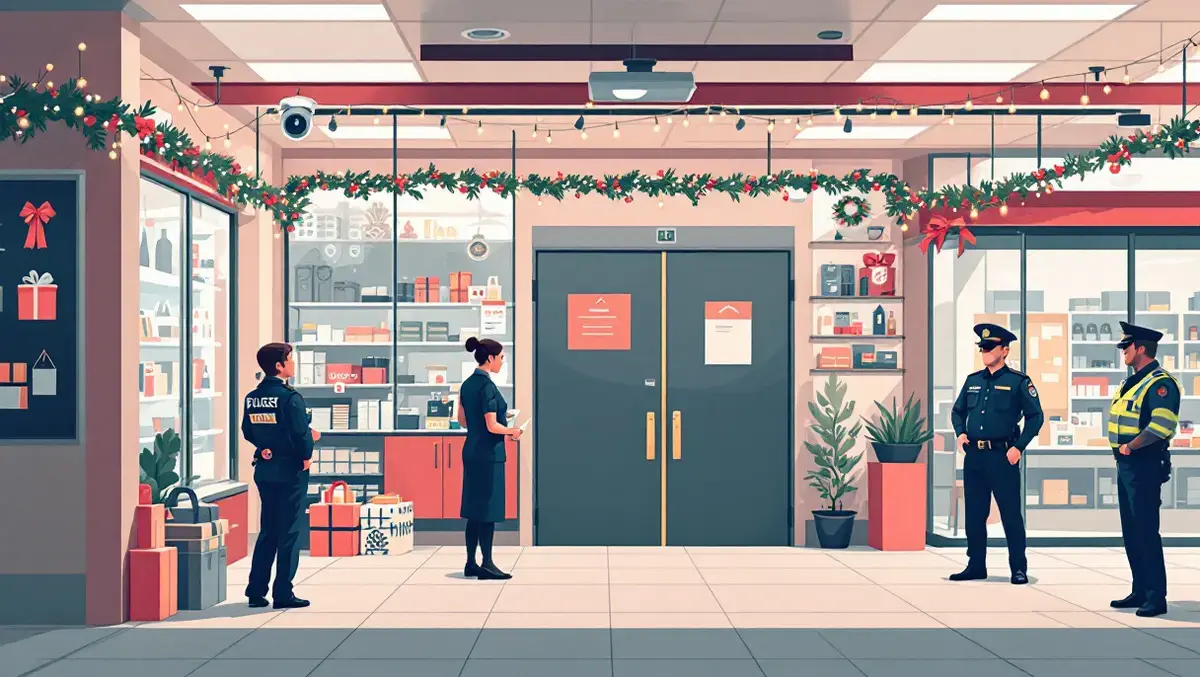
Digital ID urges shops to tighten security for Christmas
Wed, 25th Nov 2026 (Today)
Digital ID has urged retailers to tighten in-store security ahead of the Christmas shopping peak, as SAI forecasts a sharp rise in shoplifting on the busiest trading days.
Analysis from retail intelligence firm SAI suggests Super Saturday, the last Saturday before Christmas, will be the highest-risk day of the season for retail theft. Shoplifting incidents are projected to rise 66% year on year and sit 10% above the daily average.
The Saturday of the Black Friday weekend is expected to be the second-busiest day for in-store theft. Black Friday, Boxing Day and the second Saturday in December are forecast to rank joint third.
The warning comes amid a wider rise in retail crime. Police in England and Wales recorded 519,516 shoplifting offences in the year to June 2026, according to the Office for National Statistics.
Separate figures from the British Retail Consortium's Crime Report found retailers detected 5.5 million incidents of shoplifting last year, with losses of almost £400 million.
Adam Bennett, Photo ID Card Expert at Digital ID, said retailers should focus on basic in-store controls as footfall rises and staff come under strain. His recommendations focus on staff identification, tighter access to back-of-house areas, shop floor visibility and clearer preparation for the busiest days.
Staff identification
Bennett said one of the main steps retailers should take is making staff easy to identify during busy periods, when crowded aisles can make it harder for colleagues and customers to distinguish workers from shoppers. The risk increases, he said, if offenders pose as staff or contractors to gain access to restricted areas.
"Photo ID badges tell customers who to ask for help, but they're also one of the simplest security tools a shop has because they can visually validate a team member straight away.
Make sure every colleague wears the proper uniform and badge, including managers and anyone covering a shift from another store. If someone is behind the till or walking into the back without a visible badge, staff should feel confident asking who they are."
He also highlighted the pressure retailers face when hiring temporary staff for the festive period. Fast recruitment and short-notice shift cover can leave gaps in training and create uncertainty over access to stockrooms, tills and staff-only spaces.
"Seasonal workers are a huge help at Christmas, but every new face needs proper credentials and training from their first shift.
A different design, colour or a 'temporary' marking with an end date helps the permanent team know who's new and makes sure access isn't left open after someone's contract finishes. On a temporary staff member's last day, collect their badges and switch off any access cards right away."
Back-of-house risk
Bennett identified stockrooms, cash offices and delivery points as areas where losses can mount during the festive period, particularly when deliveries increase and doors are opened more often. These areas, he said, should not rely on informal routines such as doors being pulled shut or left unsecured for convenience.
"Stockrooms, cash offices and delivery doors are where the real losses can happen, so they shouldn't rely on a door being pulled shut. Card or fob access means only the right people can get in, and you can see who went where if something goes missing.
Never prop doors open for convenience during a busy delivery window, and watch out for tailgating, where someone follows a colleague through a door before it closes."
On the shop floor, Bennett said a visible staff presence at entrances can help deter opportunistic theft. Greeting customers near the door during busy trading hours can support service while showing staff are paying attention to who is entering and leaving.
He added that retailers should review where they place frequently stolen or high-value goods. Items that are easy to resell, including electronics, fragrances, alcohol and everyday essentials, should be positioned where staff can monitor them more closely or kept in locked cabinets.
"Look at what goes missing most in your store and move it somewhere staff can see it, ideally near the tills or in a locked cabinet. Security tags and display-only packaging help too. Keep keys for locked cases with named staff, not on a hook behind the counter, so it's always clear who's responsible for them."
Incident response
Beyond prevention, Bennett said retailers should prepare staff for how to respond when thefts happen. Employees should not physically intervene or chase suspects, he said.
"The most important thing is that nobody gets hurt. No item on a shelf is worth a colleague's safety, so staff should never try to physically stop or chase a shoplifter."
He said staff should record descriptions, note the time and direction of travel, preserve CCTV footage before systems overwrite it, and report incidents to police even when the theft appears minor. Managers should also support employees involved in incidents, particularly temporary or less experienced workers.
"Report theft to the police, online or on 101, even if it seems small. Reporting builds a picture of repeat offenders and gangs, and helps police decide where to focus. If your area has a local business crime partnership or Shopwatch scheme, share it there too, so neighbouring shops can be on the lookout."