

EfficientEther launches Forge Anvil for app packaging
Fri, 27th Nov 2026 (Today)
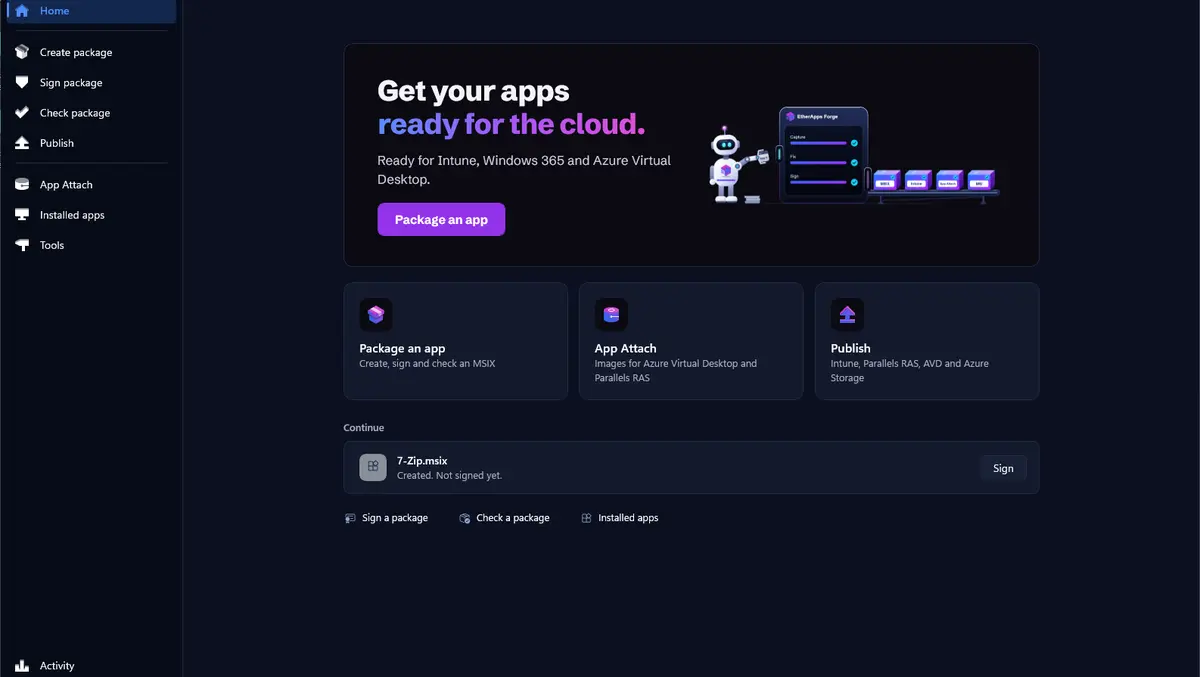
EfficientEther has launched Forge Anvil, a Windows application for packaging, signing and publishing business applications. The product is part of EtherApps Forge 1.3.
The launch addresses a long-running issue for IT teams moving desktop applications into Microsoft Intune, Windows 365, Azure Virtual Desktop and Parallels RAS. Packaging work is often split across separate tools for capture, build, signing, testing and upload, while some organisations are still managing applications tied to older Windows Server environments or estates built on App-V.
Forge Anvil is designed to bring those steps together in one interface. It can create MSIX or MSI packages from a captured application, an installer or a build folder, and can also build App Attach images for virtual desktop deployments.
The software checks certificates before signing to flag issues such as expired certificates, publisher mismatches or missing private keys before a batch is signed.
A further validation stage reviews package structure, signature and trust, along with best-practice and security issues. The application also includes a package editor that can change identity details, logos, files, virtual registry settings and Package Support Framework fixes, while keeping a list of changes for review.
Publishing workflow
Publishing is aimed at several Microsoft and third-party management environments. Forge Anvil can publish MSIX and Win32 applications to Intune, create .intunewin files, and assign applications to users, devices or groups.
For Azure Virtual Desktop, the application can build an App Attach image, upload it to Azure Files, add it to a host pool, assign users and publish RemoteApps. App Attach images can also be sent to one or more Parallels RAS farms. A single run can publish to several destinations and generate a receipt for each package and destination.
EfficientEther is also introducing preview support for Windows 365 Cloud Apps and third-party support. Forge Anvil runs as a native WinUI 3 application and ships as a single MSIX bundle for x64 and ARM64 devices.
The software builds MSIX and MSI packages for either architecture and verifies App Attach images on both. It runs on Windows 10 version 2004 or later, and on Windows 11.
Migration pressure
The launch comes as some customers continue to move away from older application delivery models. Microsoft customers using Windows Server 2016 face the end of extended support in January 2027, while App-V estates are also under pressure to migrate to supported alternatives.
EfficientEther argues that application readiness remains a bottleneck even where cloud PC and virtual desktop platforms are already in place. Its Forge Capture tool is intended to record an application on the machine where it runs, including older Windows and Windows Server versions, and can also record applications that are already installed when the installer is no longer available.
Forge can convert App-V 5 packages to MSIX or MSI without resequencing, which may appeal to organisations trying to preserve access to legacy business applications during migration projects.
In a study of 3,261 Windows applications, EfficientEther said 9 in 10 were packaged automatically and 8 in 10 installed and started in a recorded test. It said those figures apply to that sample rather than to all Windows applications.
"Most teams moving to Windows 365, Azure Virtual Desktop or Intune do not stall on the platform. They stall on the applications," said Ryan Mangan, Chief Executive Officer, EfficientEther.
"Forge Anvil gives a packaging team one place to take an app from capture to the people who need it, with a record of every step," said Mangan.
AI controls
Forge Anvil also includes optional AI-related functions, though both are switched off by default. One option allows tools such as GitHub Copilot in Visual Studio Code and other AI clients to connect to the Forge MCP server to build, check and publish packages using the same engine as the desktop application.
Another allows an organisation's own AI service, such as Azure OpenAI or a self-hosted model, to suggest fixes when a package fails. Teams choose which AI systems may read and change content, and actions affecting a service require confirmation.
Production signing remains unavailable to AI assistants, and each tool call is written to an activity record. Package files, certificates and passwords are not sent to an AI service.
"AI can take a lot of the repetitive work out of packaging, and teams should use it. What they shouldn't do is hand it the signing keys," said Mangan.
"In Forge, AI stays off until a team turns it on, anything that changes a service asks first, and production signing stays with people. That's where I think the line should be," said Mangan.
Forge 1.3 also adds an activity record for packaging, signing, publishing and AI tool calls, with passwords, tokens and keys removed, along with an optional SPDX 2.3 software bill of materials for each package. A full licence costs GBP £895 plus VAT per named packaging administrator per year, or USD $1,202.80 through Microsoft Marketplace.