

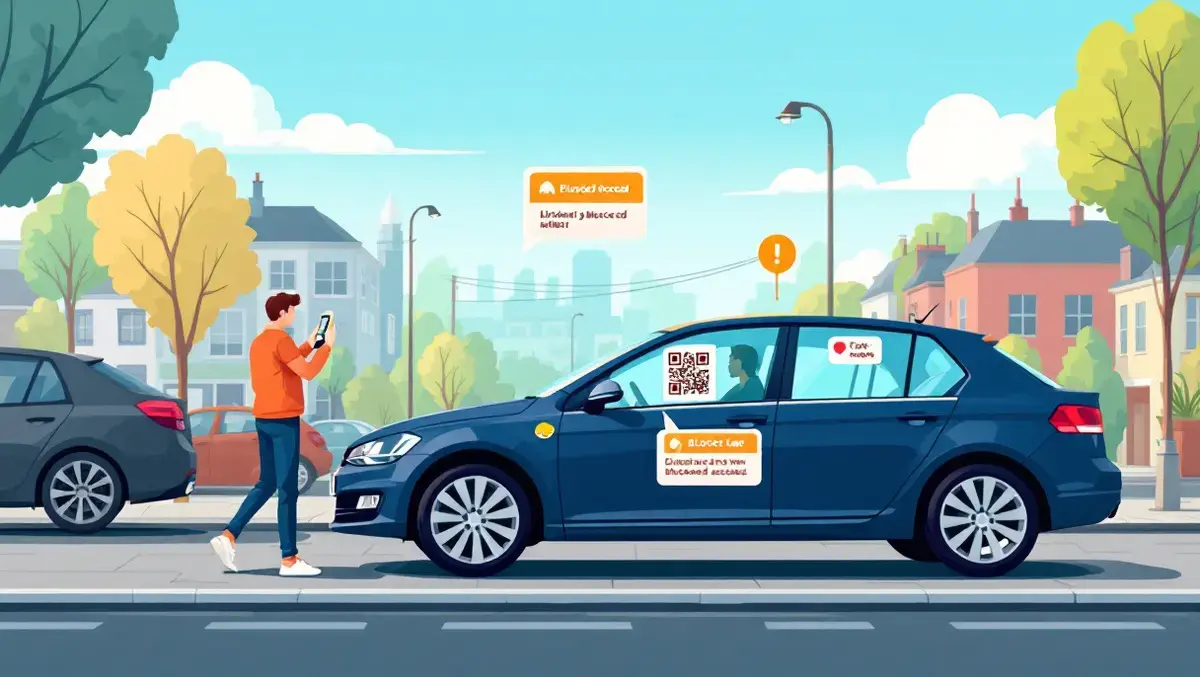
PingCar app lets passers-by message drivers via QR code
Wed, 25th Nov 2026 (Today)
PingCar has launched a mobile app that lets people contact vehicle owners by scanning a QR code displayed on a car. It is available on iOS and Android.
The service is designed for situations where someone needs to alert a driver to a practical problem but has no direct way to reach them. Examples include a vehicle blocking access, lights left on, or visible damage that a passer-by wants to report.
Vehicle owners create a personal QR code through the app and display it with the vehicle. Another person can then scan the code with a smartphone and send a message through the app, allowing the owner to receive a notification without publishing a phone number on the car.
The app was developed by Lirim Salihu and is aimed at vehicle owners who want to be reachable about their car while keeping personal contact details private.
How it works
The QR code serves as the first point of contact between a vehicle owner and a member of the public. The sender does not need to know the owner's identity or search for contact information before sending an alert.
The app is intended for routine communication around vehicles in settings such as residential parking areas, workplaces, shopping locations and public car parks. In each case, the focus is on enabling a quick message exchange when a specific issue arises.
This differs from approaches that rely on parking operators, building managers or prior knowledge of the driver. Instead, the QR code provides a direct route from the person at the vehicle to the owner through the app.
Privacy focus
PingCar centres its offer on privacy as well as convenience. By using the code-and-app method, vehicle owners can make themselves reachable without displaying a mobile number or other personal details in public.
The sender also avoids sharing more information than is needed to raise the issue. The interaction starts with a scan and a message, while the owner remains in control of how to respond.
The app enters a familiar area of minor day-to-day parking and vehicle disputes, where the absence of a simple contact method can turn a small inconvenience into a prolonged problem. Common examples include a blocked exit, overlooked headlights or unnoticed damage, where speed matters but direct contact is often missing.
In these cases, people often rely on handwritten notes, attempts to identify the driver, or calls for help from site staff. PingCar aims to replace those steps with a digital contact point attached to the vehicle itself.
Broader use
The same method can also be used for other notices that may help a vehicle owner deal with an issue. The app is presented as a general communication tool for vehicle-related messages rather than a service limited to one type of incident.
Its launch also reflects the wider use of QR codes in everyday consumer behaviour. As smartphone users have become more familiar with scanning codes for payments, menus and sign-ins, PingCar applies the same habit to communication between strangers about a car.
This may reduce the friction involved in reaching a driver in public spaces, especially when the alternative is no contact method at all. The model depends, however, on vehicle owners choosing to display the code and on other users recognising and trusting it as a legitimate way to send an alert.
PingCar says its purpose is to make the initial connection straightforward and private, using a visible code on the vehicle and handling the message exchange within the app.