

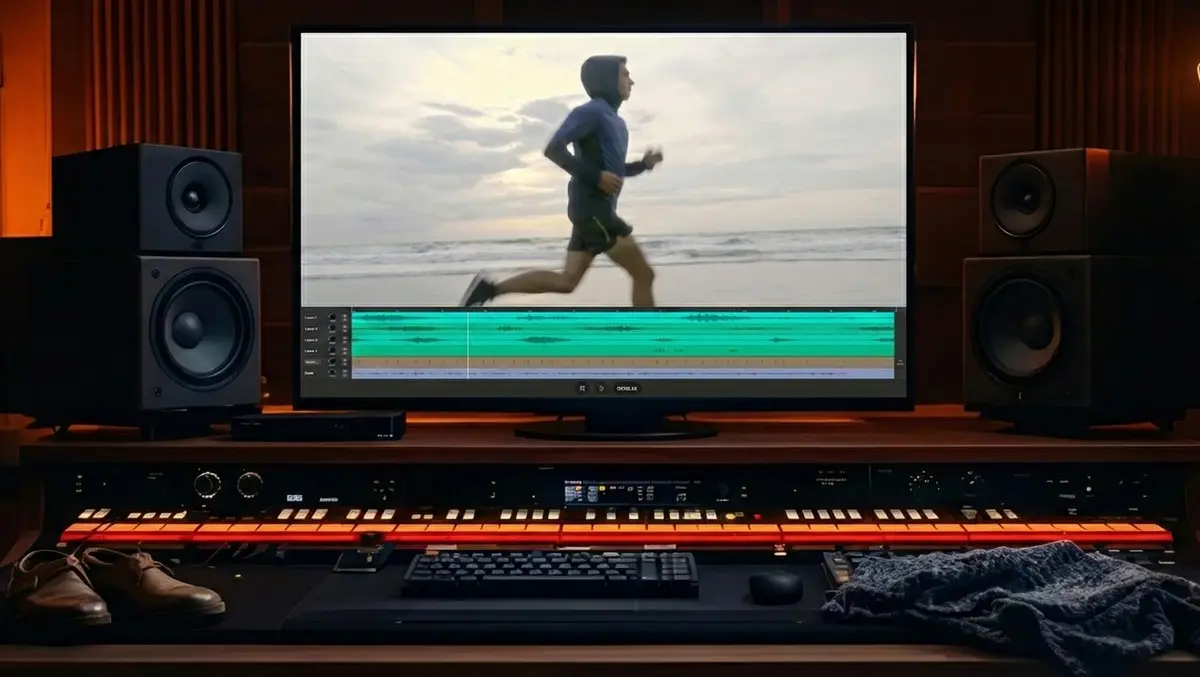

Scottish audio software company Krotos has expanded its AI-based Video to Sound service with automatic footsteps and cloth Foley, targeting faster sound design for video editors and content creators.
The update adds two new categories of synchronised sound. Editors can now generate professionally recorded footsteps and clothing movement audio that align with on-screen action in a matter of seconds.
Video to Sound analyses video files through AI-assisted visual processing. It reads movement, pacing and scene context in a clip. It then places footstep and cloth sounds in sync with the picture.
Krotos positions the service for a range of productions, from short social clips to longer-form projects. The system works on videos as short as 10 seconds and up to 10 minutes for some subscription tiers.
Manual work reduced
Sound editors have traditionally created footsteps and cloth Foley by hand. The job involves aligning individual sounds with character movement and adjusting timing as picture edits change.
Krotos has already offered ambience generation in Video to Sound. That earlier workflow focused on automatic background sounds. The latest release extends the approach into physical movement on screen.
The company says users can quickly add realistic footstep tracks that follow a character's path without frame-by-frame editing. Editors choose a walking surface such as tile, gravel or wood. The system then selects and places suitable recordings from its library.
Video to Sound also exports footstep performances as MIDI data. This gives editors access to timing information inside a digital audio workstation. They can then adjust hits, change sound sources or route the pattern into Krotos Studio or other tools.
Cloth Foley automation
The release introduces automatic cloth Foley alongside footsteps. Video to Sound examines motion and shifts in movement across the frame. It then generates context-aware cloth sounds that track turns, body movement and layered action.
Editors can break down the generated material into separate layers. They can audition and balance these layers in a browser-based interface before export. The audio can then move into a preferred digital audio workstation or non-linear editing system for further mixing.
Krotos frames the browser workflow as a bridge between automated generation and detailed post-production. The aim is a faster first pass that still feeds into standard professional editing environments.
Access through Krotos Studio
Video to Sound operates as part of the company's Krotos Studio platform. Krotos offers the service within a subscription model that covers several tiers.
New users can run Video to Sound on a limited number of projects before starting a broader Krotos Studio trial. The company says subscribers at all Krotos Studio levels receive access to the feature.
Those on the Krotos Studio Max tier can upload videos of up to 10 minutes. They can process as many as 200 videos per month. Krotos states that uploaded videos do not feed into AI training datasets.
The company describes Krotos Studio as part of a wider line-up of sound design software. Its portfolio also includes Dehumaniser, Reformer Pro, Weaponiser, Igniter and Concept 2.
Krotos software is in use across film, television and games production. The company lists credits on franchises such as Game of Thrones, Avengers, The Lion King, The Jungle Book, Terminator, Star Trek, Frozen and Stranger Things.
Krotos says its products focus on performance-based sound creation and customisation. It highlights time savings for content creators and an emphasis on creative workflows for complex sound design tasks.
The firm is headquartered in Edinburgh and continues to develop AI-assisted tools for sound professionals and independent creators working in post-production and interactive media.