

London e-bike thefts hit record high as market grows
Mon, 25th May 2026.webp)
Nearly 3,000 powered cycles and e-bikes were stolen in London last year, a 21% increase from the previous year.
Data obtained from the Metropolitan Police showed 2,966 powered cycles and e-bikes were stolen in the capital during 2025, up from 2,448 in 2024. Pelion said the total was likely the highest on record.
The figures add to signs of rapid growth in London's micromobility market. Transport for London recently reported a 50% year-on-year increase in demand for rental e-scooters in the 12 months to September 2025.
The city's rental e-scooter trial has also expanded, with Lime and Voi operating across more than 1,600 parking bays in 11 participating boroughs.
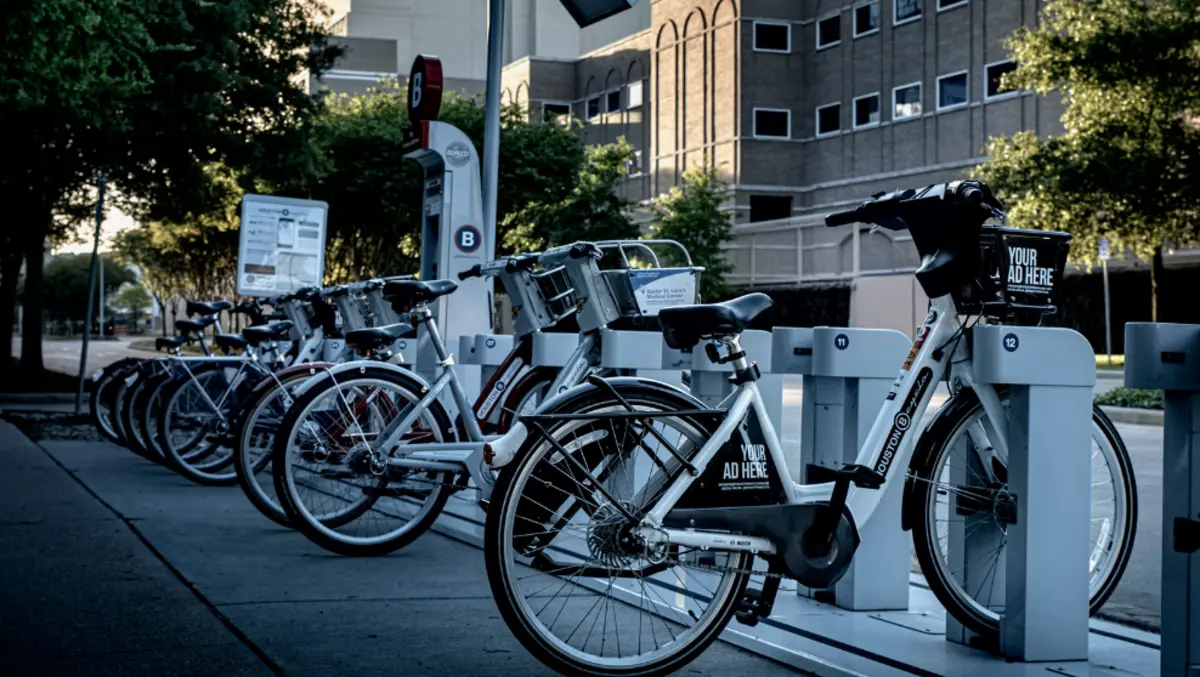
Pelion's wider study of European cities found London had the largest number of e-bikes among the markets it examined. The report counted more than 75,000 e-bikes across free-floating and station-based schemes in London, compared with 38,000 in Paris, 20,000 in Berlin and 18,000 in Milan.
By contrast, London had a much smaller e-scooter fleet. The city had 4,000 e-scooters, far behind Berlin's 19,000, because local rules limit each operator to 2,000 vehicles.
Theft trend
The latest total extends a multi-year rise, though the pattern has not been steady. Metropolitan Police figures cited by Pelion showed 2,171 thefts in 2021, 2,216 in 2022, 2,120 in 2023, 2,448 in 2024 and 2,966 in 2025.
The increase comes as e-bikes become more visible on London's streets through both private ownership and shared schemes. More vehicles in circulation can widen the market for resale and parts, while making it harder for operators and owners to secure them.
Pelion's report, produced with Berg Insight, examined connected systems used in micromobility fleets. It said telematics installations in powered bicycles are expected to rise from nearly 2 million in 2026 to just under 3.5 million by the end of 2029.
These systems can provide location, battery status and usage data. In theft cases, operators and manufacturers use them to monitor vehicles and support recovery efforts.
Insurance pressure
Dave Weidner outlined Pelion's view of the shift in risk facing the sector.
"E-bikes and powered cycles have shifted from low-value assets to high-value targets. Their portability and resale value make them significantly more vulnerable to theft than cars or motorcycles, and the impact is growing as adoption scales."
"In that context, connectivity-enabled services are becoming a clear differentiator for manufacturers looking to strengthen their market position in this space. Many are already responding by adopting stolen vehicle tracking solutions based on embedded cellular connectivity, reflected in the growing volume of telematics deployments across the sector."
"In some markets, insurers are already mandating approved tracking solutions or pricing risk accordingly. That dynamic will only accelerate. Theft is no longer a side issue in micromobility; it is becoming a defining factor in how these services are built, deployed and scaled in London, across the UK and Europe," said Weidner, Pelion's Chief Executive.
The data points to growing tension in London's transport mix. Shared and privately owned electric two-wheelers are becoming more common as cities push lower-emission travel, but rising theft adds costs for operators, owners and insurers.
For fleet operators, losses can affect vehicle availability, maintenance schedules and replacement spending. For consumers, theft risk may influence where they park, what security devices they buy and whether insurance remains affordable.
London's position is notable because it combines a large e-bike base with tighter e-scooter rules than some European peers. That has made the capital one of the biggest markets for electric cycles while limiting the scale of scooter fleets.
With more than 75,000 e-bikes already in free-floating and station-based schemes, the city stands out as a major test case for how operators, manufacturers and insurers respond to a rising theft problem.