


Young adults hit hardest by mobile app barriers in UK
Mon, 25th May 2026.webp)
Accessiway has published UK research showing that 64% of smartphone users encounter barriers when using apps, websites and online services on their phones. The highest reported rate was among people aged 18 to 24, at 81%.
Based on a nationally representative Censuswide survey of 1,000 UK adults, the findings point to problems affecting every age group. More than half of smartphone users in each age bracket said they had experienced at least one barrier.
The research suggests mobile usability problems are not confined to older users or people with disabilities, despite a common assumption that younger consumers are more comfortable navigating digital services. Among users aged 55 and over, 53% said they had faced at least one issue, lower than the rate among the youngest adults.
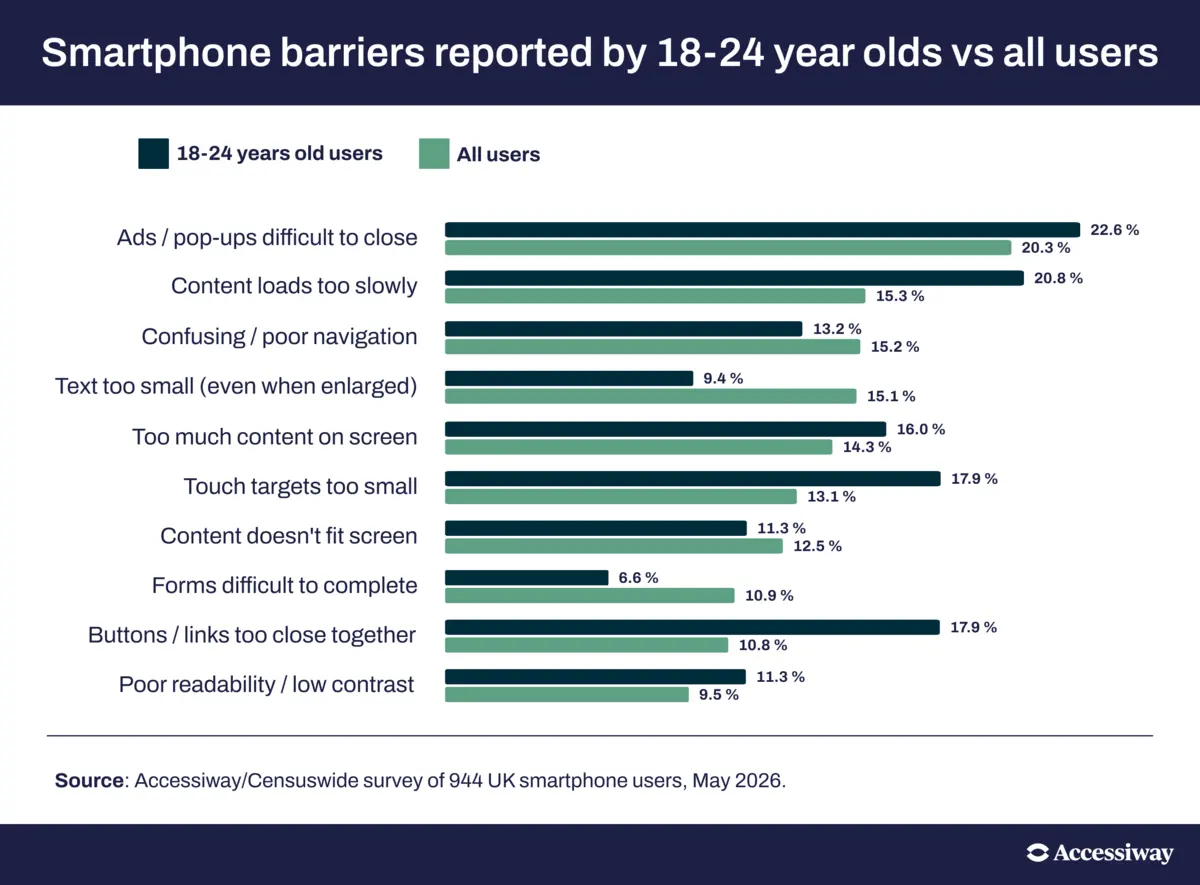
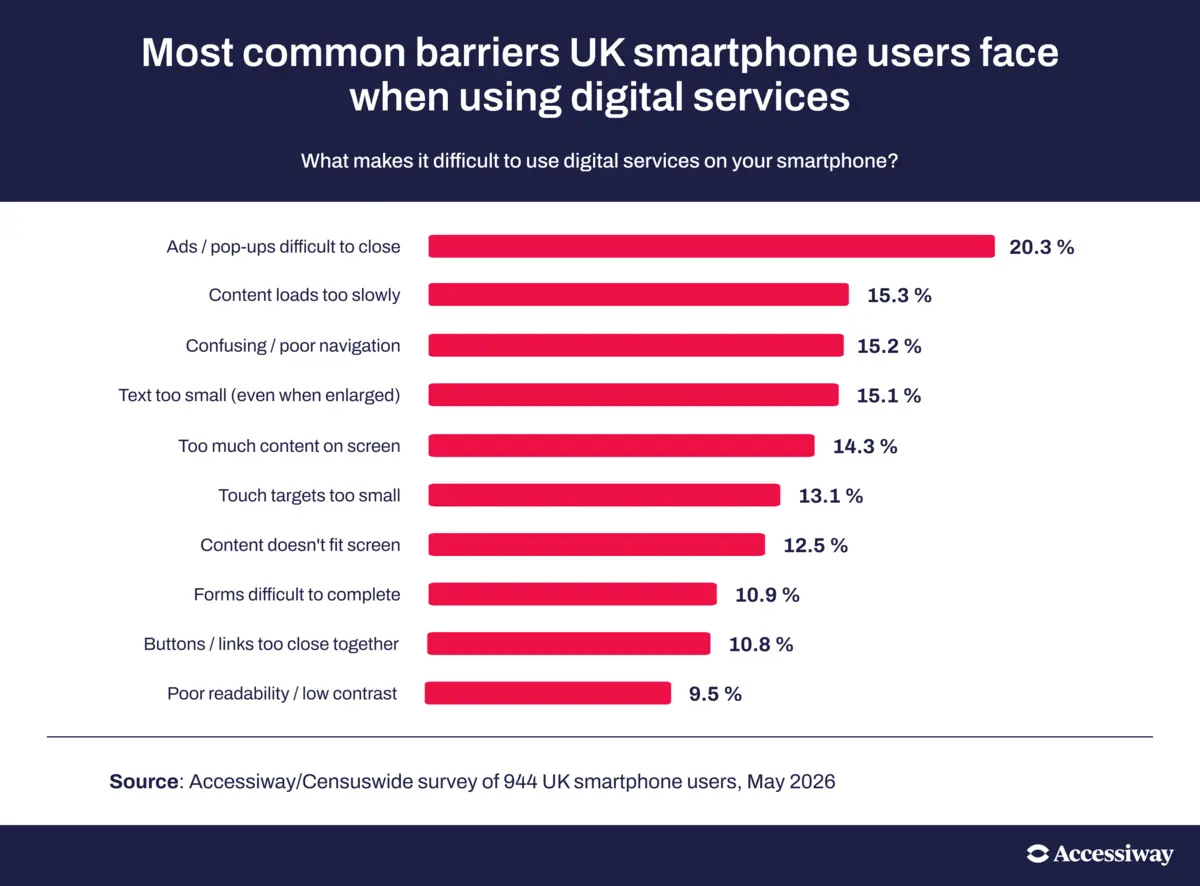
Among the most commonly reported problems were ads, pop-ups and cookie prompts that were hard to close, cited by 21.5% of smartphone users. Slow-loading content was reported by 16.2%, while 16.1% pointed to confusing or poor navigation.
Text size was another recurring complaint. Some 16.0% of users said text remained too small even when enlarged, while 13.2% said content did not fit properly on their screen.
Youngest users
The age breakdown stands out because it challenges the idea that digital barriers mainly affect older consumers. Instead, the survey found the highest level of friction among younger adults, a group often regarded as the most confident mobile users.
That pattern matters for businesses that rely on mobile traffic for sales, bookings and customer service. If users struggle to complete forms, navigate menus or dismiss on-screen prompts, companies risk losing transactions before a purchase or enquiry is completed.
Accessiway linked the findings to wider pressure on retailers and other consumer-facing businesses. A CBI survey published in April reported the sharpest year-on-year decline in retail sales since the series began in 1983, with consumer confidence at a multi-year low.
Separate estimates from disability charity Purple put the cost of failing to meet the needs of people with disabilities at around GBP £2 billion a month for UK businesses. Research from the Research Institute for Disabled Consumers found that 63% of people with disabilities would give a previously inaccessible brand another chance if it improved accessibility.
Commercial impact
The latest results build on earlier research pointing to a similar trend in online shopping. In that study, 57% of UK consumers said digital accessibility problems would put them off shopping online during major sales periods, rising to 76% among younger adult shoppers.
The latest figures broaden that concern beyond peak retail periods into day-to-day mobile use. They indicate that barriers such as intrusive prompts, poor layout and unclear navigation are affecting routine interactions with digital services.
Amit Borsok, Chief Executive Officer and Co-Founder of Accessiway, said: "Accessibility is, first and foremost, about inclusion. People with disabilities and access needs must be able to use digital services equally. But the impact of inaccessibility does not stop there. These findings show that inaccessible design creates friction across the whole customer base. At a time when retailers are under pressure, businesses cannot afford to lose customers because a form is difficult to complete, a pop-up cannot be closed, or content does not work properly on a mobile screen. It goes to the heart of customer experience, loyalty and commercial performance."